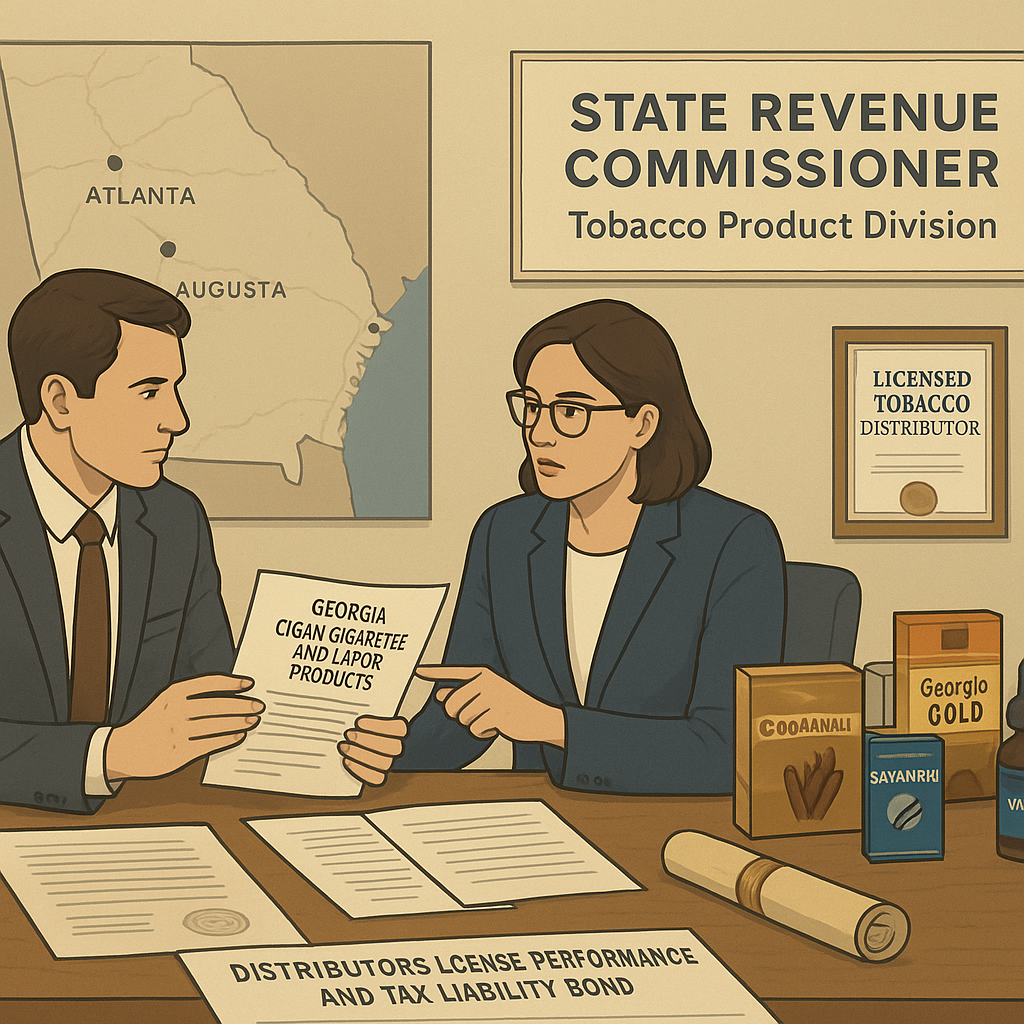
Are you thinking about diving into the tobacco business in Georgia? Maybe you’ve got your eye on distributing cigars, cigarettes, or the latest vapor products. It’s an industry with steady demand, but before you sell your first pack or vape cartridge, there’s a critical piece of paperwork you can’t afford to overlook. No, I’m not talking about a simple business license. I’m talking about the Georgia Cigar, Cigarette, and Vapor Products Distributors License Performance and Tax Liability Bond. This bond is your golden ticket to operating legally and keeping the state’s revenue stream flowing smoothly. Let’s unpack what this requirement really means, why it exists, and how you can secure yours without breaking a sweat.
The Starting Line: Getting Your Distributor License in Georgia
If you plan to bring untaxed cigarettes, cigars, or vapor products into Georgia—or manufacture them here—you need a distributor license. The Georgia Department of Revenue, acting through the State Revenue Commissioner, oversees this entire process. Think of the license as your official permission slip to handle tobacco products at the wholesale or distribution level. Without it, you’re essentially invisible in the eyes of the law, and that’s a risky place to be.
But here’s the thing: the license doesn’t come all by itself. The state ties it directly to a financial guarantee. Why? Because tobacco products carry something called an excise tax. Every time a distributor sells to a retailer, there’s a tax attached. Georgia wants to make absolutely sure that money lands in the state treasury on time, every time. That’s where the bond steps in.
What Exactly Is the Performance and Tax Liability Bond?
Let’s break this down into plain English. A surety bond is not insurance for your business; it’s a three-party promise. You, the distributor, are the principal. The state of Georgia is the obligee. And a surety company is the third party that guarantees your promise. The License Performance and Tax Liability Bond guarantees two main things:
- You’ll follow all state laws and regulations related to tobacco distribution.
- You’ll accurately report and pay every penny of tobacco tax you owe.
Imagine you’re borrowing your neighbor’s car. You promise to return it with a full tank of gas and no dings. Your friend acts as a guarantor, telling your neighbor, “If they don’t fill the tank or fix a scratch, I’ll cover it.” That’s essentially how the bond works. The surety company tells Georgia, “If this distributor fails to pay taxes or breaks the rules, we’ll make good on the financial loss up to the bond amount.” Of course, if the surety ever pays out a claim, they’ll come to you for reimbursement. So, it’s a strong incentive to keep your house in order.
Why Georgia Requires This Bond for Tobacco and Vapor Distributors
You might wonder, “Why the extra hoop to jump through?” The answer comes down to protecting public funds. Excise taxes on tobacco and vapor products pump significant money into state programs. A distributor who forgets to file, underreports sales, or simply vanishes with the tax money creates a hole in the budget. The bond acts as a safety net. It ensures that the State Revenue Commissioner can recover unpaid taxes without lengthy court battles.
There’s also a fairness angle. Responsible distributors who play by the rules shouldn’t have to compete against those cutting corners. The bond levels the playing field. It reassures everyone—the state, retailers, and even consumers—that you’re a credible business committed to compliance. When you tell a retailer you’re bonded, you’re telling them you’ve been vetted and have skin in the game.
How Does the Bond Amount Get Set?
No two distributors are exactly alike. A small operation focusing on specialty cigars won’t move the same volume as a large-scale cigarette wholesaler. The Georgia Department of Revenue understands this. That’s why they don’t slap a one-size-fits-all number on every application. Instead, the State Revenue Commissioner typically calculates your bond amount based on your expected tax liability.
Often, they’ll look at your projected monthly excise tax. The bond might need to cover three times that monthly amount, or another multiplier they deem appropriate. If you’re a brand-new business with no track record, the state will make an estimate using your business plan and industry averages. Once you’re up and running, they can adjust the bond requirement based on your actual tax returns. So, if your sales skyrocket, expect a letter asking you to increase your bond coverage. It’s all about keeping the guarantee in line with the risk.
Securing Your Bond: A Walkthrough That Won’t Hurt Your Brain
Getting the Georgia Cigar, Cigarette, and Vapor Products Distributors License Performance and Tax Liability Bond feels a lot less intimidating once you know the steps.
Step One: Get Your Bond Quote
You’ll reach out to a surety bond agency that specializes in license bonds. You don’t have to navigate this alone. Provide them with basic information about your business and the bond amount the state has requested. The agency will then check your financial health. Think personal credit score, business financials, and sometimes your experience in the industry. Don’t panic if your credit isn’t perfect—there are programs for nearly every situation.
Step Two: Pay the Premium
You never pay the full bond amount upfront. Instead, you pay a small percentage called the premium. This is typically 1% to 5% of the total bond for applicants with strong credit. If your bond is $50,000, you might pay as little as $500 a year. That’s a small price for the ability to operate legally. The premium is a recurring cost; you’ll renew it annually as long as your license is active.
Step Three: File the Bond with the State
Once you pay the premium, the surety issues a bond form. This is the official document. You’ll sign it and submit it to the Georgia Department of Revenue along with your license application or renewal. From that moment, you’re bonded and covered. The state has its financial promise, and you’re free to focus on growing your distribution business.
Common Questions That Keep Distributors Up at Night
Let’s address a few head-scratchers that pop up regularly.
What Happens If I Don’t Get the Bond?
Without an approved bond, your license application gets denied. Plain and simple. Operating without a license can lead to serious penalties, including fines and the seizure of your inventory. It’s not worth the gamble. The bond isn’t optional; it’s the very mechanism that validates your license.
Is This the Same as Insurance for My Business?
Not at all. Insurance protects your business from accidents, theft, or lawsuits. A surety bond protects the state and the public. If the surety pays a claim on your behalf, you must repay every dime. It works more like a credit line than a traditional insurance policy. That’s why the surety scrutinizes your creditworthiness before issuing the bond.
Does the Bond Cover Vapor Products Too?
Yes. As vaping has grown, Georgia has folded vapor products into the same licensing and tax framework. The bond specifically mentions cigar, cigarette, and vapor products distributors. Whether you deal in sealed e-liquid bottles, disposable vapes, or bottled nicotine, you fall under this umbrella. The tax rate might differ from traditional cigarettes, but the compliance bond requirement stands firm.
Staying in Good Standing After You’re Bonded
Securing the bond is just the beginning. Keeping it active requires consistent, timely tax filings. The Department of Revenue won’t hesitate to file a claim if your tax payments fall behind. A claim can drain your bond and leave you scrambling to find a new one. Plus, a claim record makes future bonds more expensive or harder to get. Treat every tax deadline like it’s carved in stone.
Also, remember to communicate with the state if your business changes. Moving to a larger warehouse, adding a new product line like heated tobacco sticks, or bumping up your inventory could change your tax liability. Proactively updating your bond amount prevents headaches during a random audit.
Why You’ll Thank Yourself for Handling This Early
Picture this: you’ve secured a great supplier deal on premium cigars. A string of retailers is eager to stock your product. Then you call the Georgia Department of Revenue only to learn your application won’t move without a bond in place. Delays like that can cost you real money and damage your reputation with partners. Getting your bond squared away before you start heavy marketing keeps your launch smooth.
The good news? The bond process fits into a standard licensing timeline without much drama. With a knowledgeable surety agent, you can often walk away with a bond in hand within a day or two of applying, especially for smaller bond amounts. Larger bonds may require a bit more underwriting, but it’s still a straightforward process.
Your Next Move
The Georgia Cigar, Cigarette, and Vapor Products Distributors License Performance and Tax Liability Bond might not be the flashiest part of your business plan. It won’t make your products taste better or sell faster. But without it, you simply don’t have a legal business in the Peach State. Consider it the foundation under your entire operation—a quiet, strong layer of trust between you, the state, and every customer you serve.
So, take that next step. Reach out to a surety bond professional, gather your financial records, and get a quote. You’ll find that what once looked like a bureaucratic tangle is actually a manageable, even sensible, requirement designed to keep Georgia’s tobacco market honest and thriving.