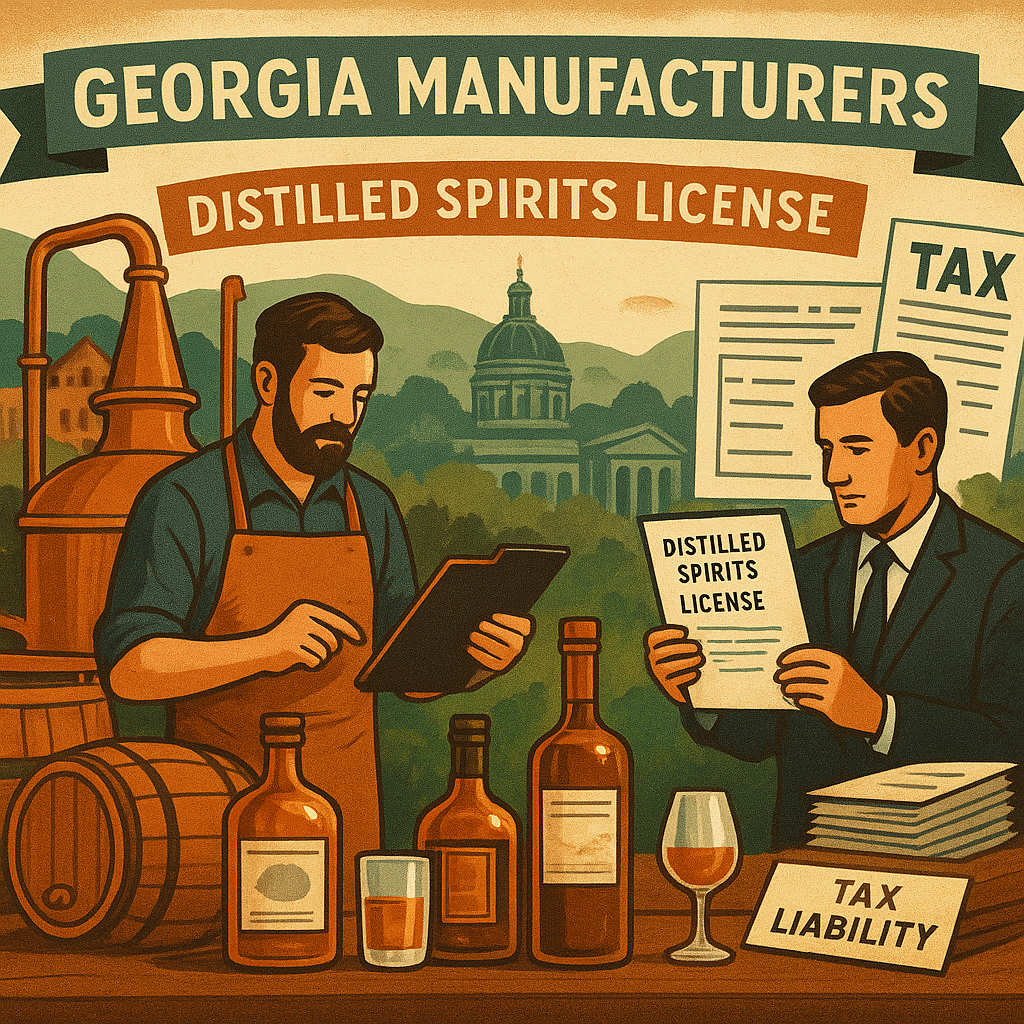
Thinking about launching a distillery in the Peach State? Whether you’re dreaming of crafting small-batch bourbon, rye whiskey, or a signature gin, one thing is certain: you’ll need to navigate Georgia’s licensing and bonding requirements before that first drop flows. It might sound intimidating, but think of these steps as the guardrails that keep your business legal, your taxes in order, and your reputation squeaky clean.
At the center of it all sits the Georgia Manufacturers Distilled Spirits License and a specific financial tool called the Performance and Tax Liability Bond. Both of these are overseen by the State Revenue Commissioner. If you’re wondering what all that means and how it affects your craft spirits venture, you’re in the right place. Let’s break it down into bite-sized, easy-to-understand pieces.
What Exactly is a Georgia Distilled Spirits Manufacturer License?
Imagine you want to open a bakery. Before selling your first loaf, the local health department wants to make sure your kitchen meets safety standards and that you understand food handling laws. Distilling spirits is similar, just with a few extra layers because alcohol production is tightly regulated.
A Georgia Manufacturers Distilled Spirits License is essentially official permission from the state to produce (manufacture) distilled spirits. That means any operation where you’re fermenting, mashing, distilling, rectifying, or bottling hard liquor—vodka, whiskey, rum, brandy, and beyond—needs this license. It’s not just for the giant commercial distilleries. Even a craft start-up working out of a converted warehouse must comply.
The license ties directly to state tax obligations. Holding it confirms you’ve agreed to follow all Georgia laws regarding the manufacture of liquor, including keeping proper records, filing tax returns, and, critically, paying those taxes on time.
The State Revenue Commissioner’s Role
When you apply for the license, the State Revenue Commissioner of the State of Georgia acts as the gatekeeper. Their department reviews your application, checks your background, examines your business plan, and ensures you meet all financial responsibility standards. They also have the authority to require that performance and tax liability bond. In short, the Commissioner’s job is to protect both the public and the state’s interest in collecting revenue from alcohol sales. You can think of the Commissioner as the referee who makes sure everyone plays by the rules.
Understanding the Performance and Tax Liability Bond
Now here comes the piece that often confuses new distillery owners: the bond. No, this isn’t like a savings bond you can cash in later. A Georgia Manufacturers Distilled Spirits License Performance and Tax Liability Bond is a three-party guarantee designed to ensure you do what you promise. Let’s unpack that.
In simple terms, a surety bond is a safety net. If you fail to pay your liquor excise taxes or break specific regulations, the bond steps in to cover the financial loss to the state. But here’s the important part: you ultimately have to repay any money the bond company pays out. It’s a form of credit, not insurance.
A helpful analogy: think of the bond like a security deposit on an apartment. The landlord holds the deposit in case you damage the property or skip out on rent. If everything goes smoothly, you get it back (or in the bond’s case, you just keep paying a small annual premium). If you cause problems, that deposit covers the damages—and then the landlord comes after you for the difference. The bond works the same way, just with a specialized surety company instead of a landlord.
Three Parties in Every Bond
There are three key players in this arrangement:
- The Obligee (State of Georgia): The entity requiring the bond. The State Revenue Commissioner mandates it to safeguard public funds.
- The Principal (That’s You): The distillery owner who must purchase the bond and comply with all legal and tax obligations.
- The Surety (Bond Company): The financial backer that guarantees the principal will perform as promised. If the principal fails, the surety initially covers the loss but then seeks reimbursement from the principal.
Why Is This Bond So Important?
You might be thinking, “Another expense on top of equipment, barrels, and ingredients?” Yes, but this bond serves a critical purpose. Alcohol excise taxes generate significant revenue for the state, and Georgia wants to ensure those taxes are collected reliably. Without the bond, a distillery could produce thousands of gallons, sell them, collect the tax from the buyer, and then vanish without ever forwarding that money to the state. The bond eliminates that risk.
Beyond taxes, the bond also guarantees compliance with other performance requirements laid out in Georgia law. That could include following labeling rules, reporting production amounts accurately, or adhering to safety standards. It’s a blanket promise that you’ll run your business by the book.
Who Needs This Bond?
If you hold a Georgia Manufacturers Distilled Spirits License—meaning you’re actively producing distilled spirits within the state—you will almost certainly need this bond. It doesn’t matter if you’re a giant facility or a micro-distillery. The only potential exceptions might come if the Commissioner determines a different financial arrangement is acceptable, but that’s rare. Generally, if you’re manufacturing liquor, bond requirements kick in automatically.
How Much Does the Performance and Tax Liability Bond Cost?
Here’s some good news: you won’t need to pay the full bond amount upfront. The state sets a bond amount based on factors like your expected production volume, storage capacity, and anticipated tax liability. For a small distillery, the required bond might be $10,000, $25,000, or even $50,000. Larger operations could see amounts in the six-figure range.
You pay only a small percentage of that total—usually between 1% and 5% annually—as a premium. The exact rate depends on your personal credit score, business financials, and experience in the industry. So if your required bond is $25,000 and your premium rate is 2%, you’d pay just $500 per year to stay bonded. That’s a manageable cost for the peace of mind and legal compliance it provides.
Steps to Secure Your License and Bond
Getting everything in place doesn’t have to be overwhelming. Here’s a simplified roadmap to help you move forward:
- Prepare Your Application: Gather all business details, ownership structure, premises floor plans, and background information. The State Revenue Commissioner’s office will want a complete picture.
- Determine Your Bond Requirement: The Commissioner will notify you of the specific bond amount needed for your operation. Don’t guess—wait for official guidance.
- Contact a Reputable Surety Bond Agency: Work with a bond specialist who understands Georgia’s alcohol manufacturing requirements. They’ll help you get the best rate and walk you through the paperwork.
- Submit the Bond with Your License Application: The approved bond becomes part of your license file. Without it, your license won’t be issued.
- Pay the Bond Premium: Once approved, you’ll pay the annual premium and keep it active for as long as your license remains valid.
Staying Compliant: Taxes and Reporting
Once you’re licensed and bonded, the real work begins. The Performance and Tax Liability Bond isn’t a set-it-and-forget-it item. Your day-to-day actions determine whether that bond ever needs to be used. Filing accurate excise tax returns on time is job one. Georgia typically requires monthly reports detailing how much you produced, sold, or transferred. Any inconsistency can trigger an audit and potentially a claim against your bond.
Think of the bond as your business’s accountability partner. It reminds you that skipping a tax payment isn’t just a late fee—it could jeopardize your entire operation. Plus, maintaining a clean record can help you secure lower bond renewal premiums down the road because you’ll be seen as a low-risk principal.
Practical Tips for Smooth Sailing
- Keep meticulous records: Every gallon matters. Use dedicated software or a trusted accountant familiar with alcohol excise taxes.
- Set calendar reminders for filing deadlines: Missing a due date is one of the easiest mistakes to make—and the easiest to prevent.
- Communicate with the Revenue Commissioner’s office: If you need to change your bond amount due to production changes, be proactive. A sudden spike in output without an adequate bond could cause compliance issues.
- Renew your bond before it expires: Letting your bond lapse can result in automatic license suspension. Mark the renewal date on your calendar.
What Happens If You Don’t Comply?
Nobody plans to fail, but it’s essential to understand the consequences. Operating without a valid Georgia Manufacturers Distilled Spirits License Performance and Tax Liability Bond or failing to pay taxes can lead to steep fines, immediate license revocation, and even criminal charges. A surety bond claim will tank your credit and make it incredibly difficult—and expensive—to get bonded again. In a worst-case scenario, you might lose your distillery entirely.
The state takes these matters seriously because alcohol regulation touches public safety, fair market practices, and tax revenue. By staying compliant, you protect your investment and your brand’s future.
Final Thoughts
Starting a distilled spirits manufacturing business in Georgia is exciting, creative, and full of potential. But the legal framework around it—especially the licensing and the Performance and Tax Liability Bond—is there to ensure that excitement doesn’t lead to unintended tax shortfalls or regulatory trouble. When you understand the role of the State Revenue Commissioner and the purpose behind the bond, the process becomes far less mysterious.
Treat the bond not as a hurdle, but as a badge of trust. It shows the state, your vendors, and your customers that you’re committed to doing things right. Get your license, secure your bond, keep those tax reports pristine, and focus on what you love most: crafting exceptional spirits that Georgians will be proud to enjoy. With the paperwork out of the way, the real magic—distillation—can begin.