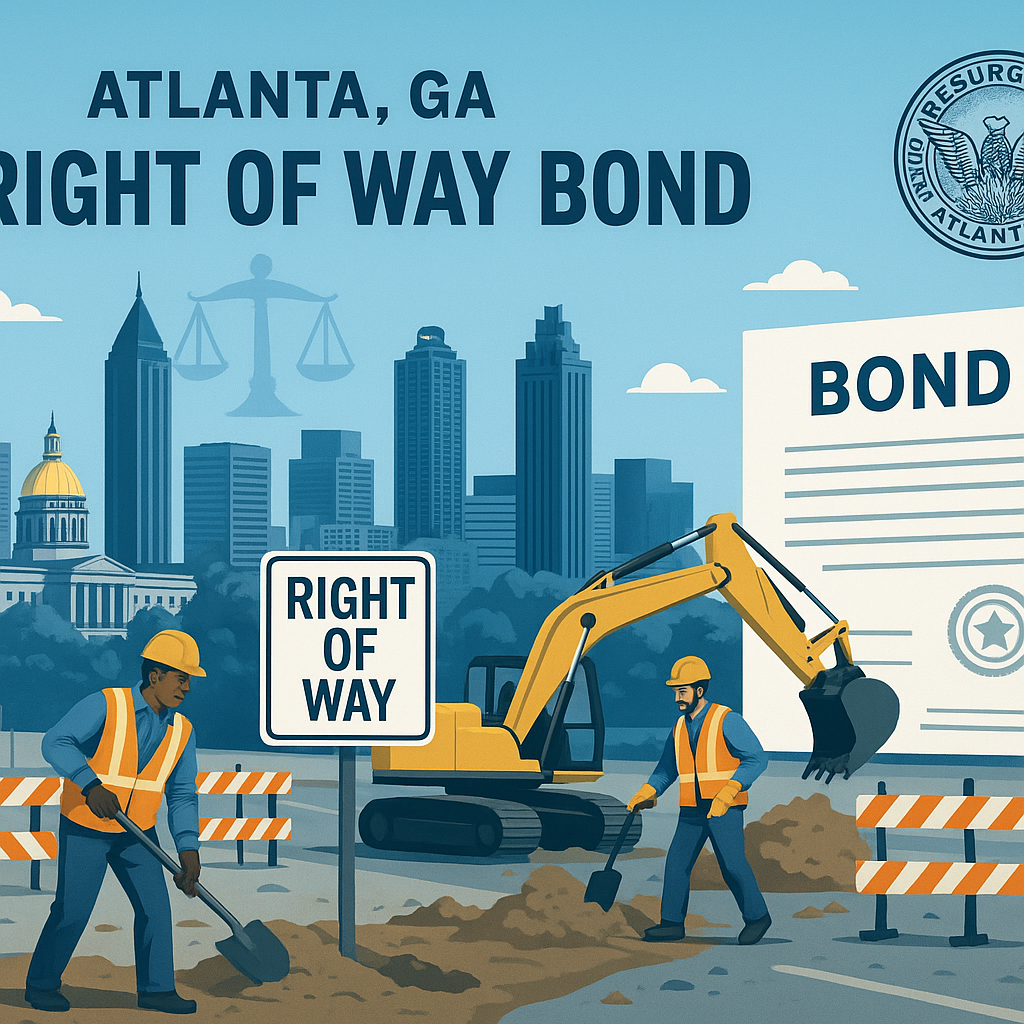
If you’re planning any kind of construction or utility work that touches a public street, sidewalk, or alley in Atlanta, you’ve likely bumped into the term “right of way bond.” It can sound like dry legal jargon, but think of it more like a promise you make to the city—a promise backed by money. Let’s break it down into plain, everyday language so you can understand exactly what’s required in 2023 and why it matters for your project.
What Exactly Is a Right of Way Bond?
Picture this: you’re digging up a section of a city street to repair a water line. The city needs assurance that when you’re done, the street will look just as good as before you started—or even better. A right of way bond is a financial guarantee that you’ll follow all the rules, complete the work properly, and fix any damage you cause. If something goes wrong, the bond covers the cost for the city to step in and make it right.
It’s not insurance for you. Instead, it protects the City of Atlanta and its residents. You pay a small percentage of the total bond amount to a surety company, and they back your promise with a line of credit. If you break the agreement, the surety pays the city, and then you repay the surety. Simple as that.
Why Does the City of Atlanta Require This Bond?
Atlanta’s streets are busy. Every day, thousands of vehicles, cyclists, and pedestrians use the public right of way. The city manages a massive network of underground utilities, sidewalks, traffic signals, and more. When someone digs into that space, risks multiply: pavement might sink, traffic lanes could be blocked dangerously, or utility lines might get damaged.
The bond requirement is the city’s way of saying, “We trust you, but we need a safety net.” It makes sure contractors don’t cut corners, abandon a messy job site, or leave the taxpayer holding the bag for expensive repairs. In other words, it keeps everyone accountable.
Who Needs an Atlanta Right of Way Bond?
You’ll likely need this bond if your work involves any of the following within the city limits:
- Excavating or trenching in streets, alleys, or sidewalks
- Installing or repairing utility lines (water, sewer, gas, electric, fiber optics)
- Building or modifying driveways that connect to public roads
- Placing dumpsters, scaffolding, or construction materials temporarily in the right of way
- Landscaping or hardscaping that disturbs the public strip between the sidewalk and the curb
Whether you’re a general contractor, a utility subcontractor, or a property owner pulling a permit for your own project, if your work encroaches on public property, a right of way bond is often non-negotiable. The city’s permit office will tell you the exact bond amount based on the scope and location of the job.
How Much Does the Bond Cost in 2023?
Here’s where a lot of folks breathe a sigh of relief. You don’t have to pay the full bond amount upfront. If the city requires a $100,000 right of way bond, you’re not writing a six-figure check. You pay a premium—usually between 1% and 5% of that total. For a $100,000 bond, you might pay anywhere from $1,000 to $5,000, depending on your credit score, business financials, and experience.
Why the range? The surety company looks at how risky you appear. A contractor with strong credit and a long track record of clean projects might land a rate closer to 1%. Someone newer or with credit challenges might pay 3% to 5%. Even so, it’s a manageable cost compared to the project budget.
Factors That Influence Your Bond Premium
- Personal credit score
- Years in business
- History of past claims or permit violations
- Financial stability of your company
- Total bond amount required by the city
Pro tip: Even if your credit isn’t perfect, many surety companies offer programs specifically for contractors. You don’t have to let a few credit dings stop your project—you just might pay a slightly higher premium until you build stronger business credit.
The Permit and Bond Process: A Step-by-Step Glimpse
Let’s walk through what you’ll actually do when you need an Atlanta right of way bond. Understanding the sequence can save you days of back-and-forth with city offices.
1. Determine your project scope. Know exactly where you’ll be working and what you’ll be doing. The city needs specifics to calculate the bond amount.
2. Apply for the permit. Head to the City of Atlanta’s Department of Transportation or the Office of Buildings. You’ll submit site plans, traffic control plans if needed, and details about your contractor license.
3. Receive the bond requirement letter. The city will tell you the bond type and amount they need. Sometimes it’s a flat amount, other times it’s based on linear feet of excavation or square footage of disturbance.
4. Contact a surety bond agency. Provide them with the city’s requirements, your personal and business information, and any requested financial documents. They’ll shop your application to multiple surety markets to get you the best rate.
5. Pay the premium and sign the bond. Once approved, you’ll pay the premium, sign the bond form, and receive an official document.
6. File the bond with the city. You must submit the original signed bond to the city before your permit is issued. No bond, no permit—so don’t skip this step.
7. Start work and stay compliant. Follow all city codes, keep the site safe, and restore any disturbed areas to the city’s satisfaction.
What Happens If Something Goes Wrong?
Let’s say a contractor accidentally damages a water main, causes a sinkhole, or fails to restore the pavement properly. The city inspects the work, finds the problem, and issues a notice. If the contractor doesn’t fix the issue within a set time, the city can make a claim against the bond.
The surety company then investigates. If the claim is valid, the surety pays the city up to the full bond amount so the repairs can be completed quickly. After that, the surety will turn to the contractor for reimbursement. That’s right—you ultimately pay for any valid claim, plus potential legal costs. So while the bond protects the public, it also keeps you on your toes.
Renewing Your Right of Way Bond: Don’t Let It Lapse
Most right of way bonds are issued for a one-year term and need to be renewed annually for as long as your permit covers the work—or until the city signs off on final inspection and releases the bond. If your project spans multiple years, you’ll need to renew the bond before it expires. An expired bond can result in a stop-work order or fines.
Renewal is typically simpler than the initial application. Your surety agency will send you a renewal notice and invoice for the premium. As long as your credit and financial situation stay stable, your rate should remain similar. If you’ve built better credit or completed several projects without claims, you might even see a lower premium at renewal time.
Common Misconceptions That Can Trip You Up
I’ve heard plenty of myths floating around about right of way bonds. Let’s clear up a few so you can move forward confidently.
“My general liability insurance covers all this.” Not true. Insurance protects you from accidents; the bond protects the city from your failure to perform or your violation of permit conditions. They are completely different products.
“Only huge construction companies need this bond.” Nope. Even a small landscaping crew installing a sprinkler system in the right-of-way strip might need a bond. The requirement depends on what you’re doing and where, not the size of your company.
“The bond amount is the same for every project.” Incorrect. A simple curb cut for a residential driveway might need a $5,000 bond, while a major utility installation across a busy arterial road could require $250,000 or more.
“Once I have the bond, I’m covered forever.” Bonds expire. They’re tied to a specific project and timeframe. You’ll need to renew or obtain a new bond for each distinct permit.
How to Choose a Bond Provider in Atlanta
Not all surety companies are the same, and working with a local agent who understands Atlanta’s specific requirements can be a game-changer. Look for an agency that:
- Has experience with City of Atlanta right of way bonds specifically
- Works with multiple surety carriers to find the best rate
- Can explain the process in plain language without drowning you in fine print
- Offers quick quotes and digital document delivery to speed up your permit
You can often get a ballpark quote online within minutes. Some agencies even specialize in helping contractors with less-than-perfect credit. Don’t be shy about asking questions; this is a relationship that can last years if you regularly work in the city.
What’s New or Noteworthy for 2023?
While the core bond requirement hasn’t undergone a massive overhaul, Atlanta continues to refine its permitting process. The city is pushing for more digital submissions and faster turnaround times. That means you’ll want a surety agent who can provide electronic bonds that are accepted by the city’s online portal. Paper bonds still work, but the convenience of a digital bond can save days of mailing and processing.
Also, because construction costs have risen, some bond amount thresholds have crept upward. Where a standard sidewalk repair bond might have been $10,000 a few years ago, don’t be surprised if you see $15,000 or more now. The city recalibrates these numbers to reflect the real cost of repairs.
Let’s Recap the Big Picture
If you take away just one message, let it be this: an Atlanta right of way bond is a tool that lets you work in public spaces while giving the city peace of mind. It’s not a punishment, an unnecessary expense, or a bureaucratic hurdle without purpose. It’s a straightforward way to show you’re serious about doing the job right.
By understanding what a right of way bond is, who needs it, how much it costs, and what steps to take, you can breeze through the permitting stage and focus on the actual work. A little preparation and the right surety partner can turn what seems like a confusing requirement into a simple checkbox on your project to-do list.
Ready to dig in—literally? Reach out to a trusted surety bond agency, get your paperwork in order, and lay the groundwork for a successful project in the heart of Atlanta. The streets are waiting, and now you know exactly how to pave your way forward.