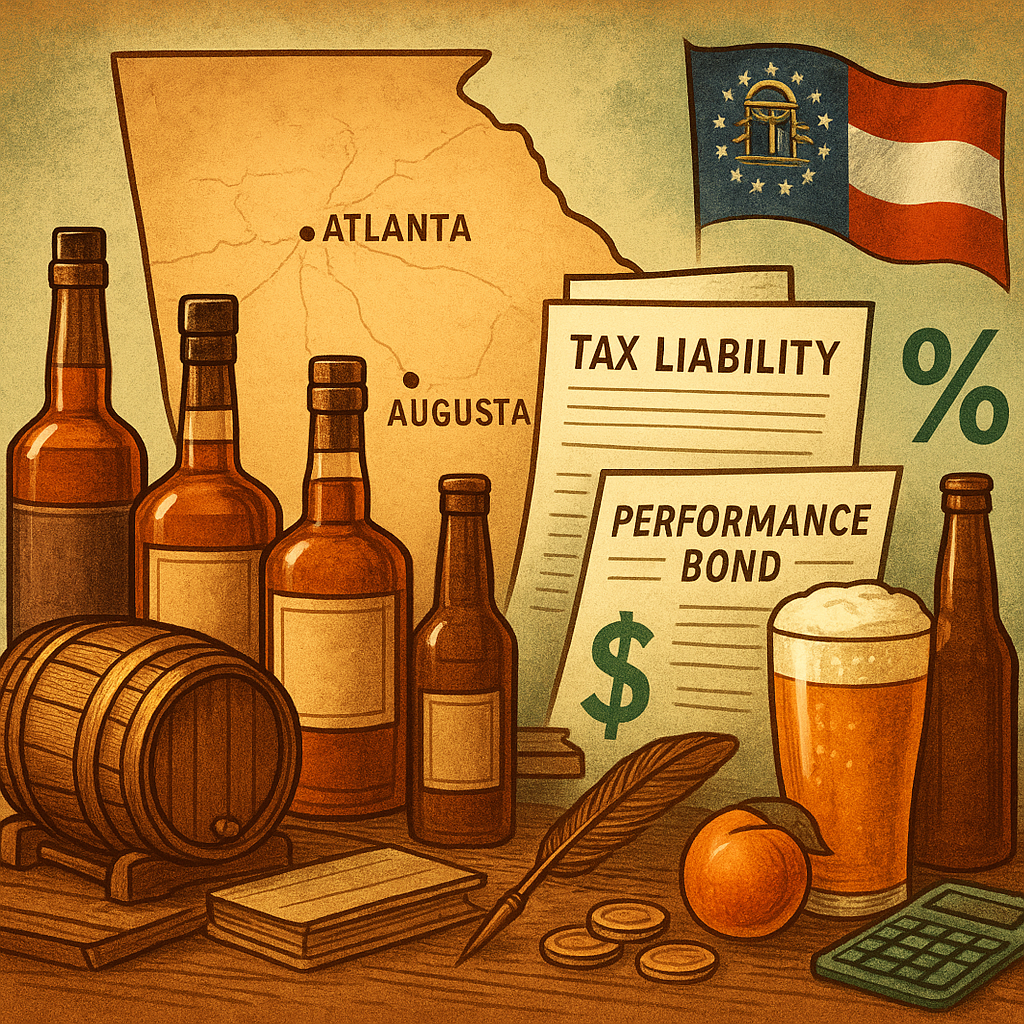
Picture this: you’ve just launched a craft distillery in the heart of Atlanta, your copper stills are gleaming, and the first batch of small-batch bourbon is aging beautifully. You’re ready to share your spirits with the world. Then, a state requirement pops up that feels like a secret handshake you haven’t learned—something called a Georgia Distilled Spirits Performance and Tax Liability Bond. What’s that all about? Don’t worry. It’s not as mysterious as it sounds, and once you understand it, you’ll see exactly how it can actually boost your business rather than slow it down.
Whether you’re a seasoned distiller expanding into Georgia or a first-time entrepreneur in the beer and spirits world, grasping the ins and outs of the state’s tax and bonding rules is your ticket to smooth sailing. Let’s break it all down in plain, everyday language—no legal jargon, no headaches.
What Exactly Is a Distilled Spirits Performance and Tax Liability Bond?
Think of a surety bond like a promise backed by a safety net. The Georgia Distilled Spirits Performance and Tax Liability Bond is a three-party agreement. You (the distiller or business owner) buy the bond from a surety company. The state of Georgia is the third party, requiring this promise. If you fail to pay your state excise taxes on spirits, the bond kicks in to cover those unpaid dollars. It’s not insurance for you—it’s protection for the state and, by extension, the public.
So why “performance” and “tax liability” in the name? The bond guarantees two things: you’ll follow all applicable laws regarding distilled spirits (performance) and you’ll remit every penny of tax you owe (tax liability). In Georgia, the Department of Revenue oversees this. They want to make sure that if a distillery or wholesaler suddenly closes shop owing a mountain of taxes, there’s a financial backup plan.
Why Does Georgia Require This Bond for Spirits Businesses?
You might ask, “Isn’t paying taxes just part of doing business? Why the extra hoop?” It’s a fair question. Alcohol is a tightly regulated product. The taxes on distilled spirits are significant—often much higher per gallon than beer or wine. The state relies on that revenue for public services. Without a bond, the risk of a fly-by-night operation evaporating along with its tax debt would be too high. The bond is a filter that keeps the industry honest and stable.
Here’s an analogy: If you were lending your lawnmower to a neighbor, you’d probably feel better if they left something valuable with you as collateral. The bond is that collateral. Georgia is “lending” you the privilege to manufacture, distribute, or sell spirits, and the bond is your good-faith deposit that you’ll play by the rules.
Not Just for Big Distilleries
Even smaller craft distilleries, rectifiers, and wholesalers often need a bond. The required amount can vary based on your expected tax liability. A brand-new startup might need a modest bond, while a high-volume operation could need something much larger. The Georgia Department of Revenue typically looks at your projected monthly excise tax and sets the bond amount accordingly—often a multiple of that figure.
Wait, There’s Also a Beer Tax? How Are Spirits and Beer Bonding Different?
You might have heard the term Beer Tax floating around. Georgia, like all states, taxes beer as well, but the bonding requirements are generally separate. A brewer or beer wholesaler might need a malt beverage bond, while distilled spirits fall under their own category. The concepts are similar: guarantee payment of state excise tax. However, the rates, forms, and bond amounts differ. Mixing them up can lead to paperwork nightmares. If your business handles both beer and spirits—say, a brewpub that also distills—you’ll likely need bonds for each category, tailored to the specific rules of the State of Georgia.
How Does This Bond Actually Boost Your Business?
Now for the good part. It’s easy to view a bond as just another expense. But here’s how flipping that perspective can help you grow.
1. It Builds Instant Trust with Partners and Customers
When you’re bonded, it signals that the state has vetted you and that you have a financial backstop. Distributors, retailers, and even savvy consumers see that you’re a legitimate, reliable player. It’s like having a seal of approval that quietly says, “We do things right.” In a crowded market, that trust can be the reason a bar picks your spirits over an unbonded competitor’s.
2. It Keeps You Off the State’s Radar (in a Good Way)
Maintaining a valid bond means you’re in full compliance. That means no surprise suspension letters, no frantic calls to an attorney, and no interruption to your production or sales. Peace of mind is an incredible business asset. You can focus on what you do best—crafting fantastic spirits—rather than wrestling with red tape.
3. It Streamlines Tax Management
To get bonded, you’ll need to project your excise tax liability. This forces you to build a robust system for tracking production, sales, and taxes right from the start. That accounting discipline pays off in better cash flow management and prevents ugly surprises during tax season. Many business owners say the process of securing a bond accidentally gave them a crash course in financial forecasting that they now swear by.
What’s the Process? A Step-by-Step Glance
Let’s walk through what you’ll need to do. It’s much simpler than you think.
- Determine your bond amount. Check with the Georgia Department of Revenue. They’ll often base it on your expected monthly tax liability for distilled spirits. A typical rule of thumb is two or three times the average monthly tax, but confirm with current guidelines.
- Find a reputable surety bond agency. An agency that specializes in alcohol bonds will understand the nuances of GA Distilled Spirits Performance and Tax Liability Bond requirements and can often get you the best rate.
- Submit a short application. The surety will look at your personal credit, business history, and sometimes financial statements. Don’t panic—many bonds are approved quickly, even for new businesses with solid credit.
- Pay the premium. You won’t pay the full bond amount. Instead, you pay a small percentage—typically 1% to 5% of the total bond for well-qualified applicants. So a $50,000 bond might only cost you $500 to $2,500 a year.
- File the bond with the state. The surety company provides the official form. You submit it as part of your licensing package. Keep a copy for your records, and set a reminder for the renewal.
Common Pitfalls and How to Dodge Them
Even seasoned business owners can trip up. Watch out for these.
Underestimating your tax liability. If your distillery takes off faster than expected, your tax bill could outgrow the bond amount. That can trigger a red flag from the state. Review your bond coverage every year and adjust if necessary.
Letting the bond lapse. If your bond expires and you don’t renew it, your license could be suspended immediately. That means you can’t legally sell or ship spirits until it’s reinstated. Automate renewal reminders or work with an agency that sends frequent alerts.
Mixing up bonds. As mentioned, a beer tax bond is not the same as a distilled spirits bond. If you diversify, don’t assume one bond covers everything. Clarify with both the state and your bond provider.
Real-Life Profit Scenario: The Bond as a Growth Lever
Let’s make this concrete. Imagine a small distillery in Savannah that produces a popular pecan-infused whiskey. They initially got a $25,000 distilled spirits bond based on modest first-year projections. By year two, their sales tripled, and they landed a distribution deal across the Southeast. The state noticed their tax liability had jumped to over $20,000 a month. Instead of being caught off guard, the owner proactively worked with her bond agent to increase the bond to $50,000. That move kept her license spotless and impressed a national retail chain that was vetting her for a shelf placement. The chain’s compliance team saw that she was not only bonded but had smartly increased her coverage. The result? A major account that doubled revenue. All because she respected the bond system rather than resisted it.
Frequently Asked Questions, Answered Casually
Is this bond the same as liability insurance?
Nope. Insurance protects your business from accidents, lawsuits, or property damage. The bond protects the state’s tax interest. If a claim is paid, you have to reimburse the surety company. It’s more like a cosigned loan guarantee.
What if my credit isn’t perfect?
You can still get bonded, though the premium might be a bit higher. Some surety companies work specifically with less-than-perfect credit and can help you improve your financial standing over time to lower the rate.
Do I need this bond if I only sell online or out of state?
If your business is located in Georgia or you hold a Georgia distilled spirits license, the bond requirement typically applies regardless of where your customers are. Check with the Department of Revenue for specifics, but don’t assume out-of-state sales exempt you.
The Bigger Picture: Georgia’s Spirits Industry Is Thriving
Georgia is quickly becoming a hotspot for craft distilleries, thanks to a blend of agricultural abundance, tourism, and supportive local communities. From the Blue Ridge Mountains to the coastal plains, distillers are creating everything from classic bourbon to innovative liqueurs. Being part of that wave means more than just making great spirits—it means building a business that can weather inspections, audits, and tax filings without breaking a sweat. The Distilled Spirits Performance and Tax Liability Bond is a small piece of paper with a big job, and when you treat it as a foundation rather than a hurdle, your business stands taller.
So, next time someone mentions Beer Tax, Georgia distilled spirits bonds, or the State of Georgia alcohol regulations, you can nod knowingly. You’ve got this. And that confidence will trickle down into every barrel you age, every bottle you label, and every handshake with a new retailer. Now go forth and distill greatness—with your bond proudly in place.