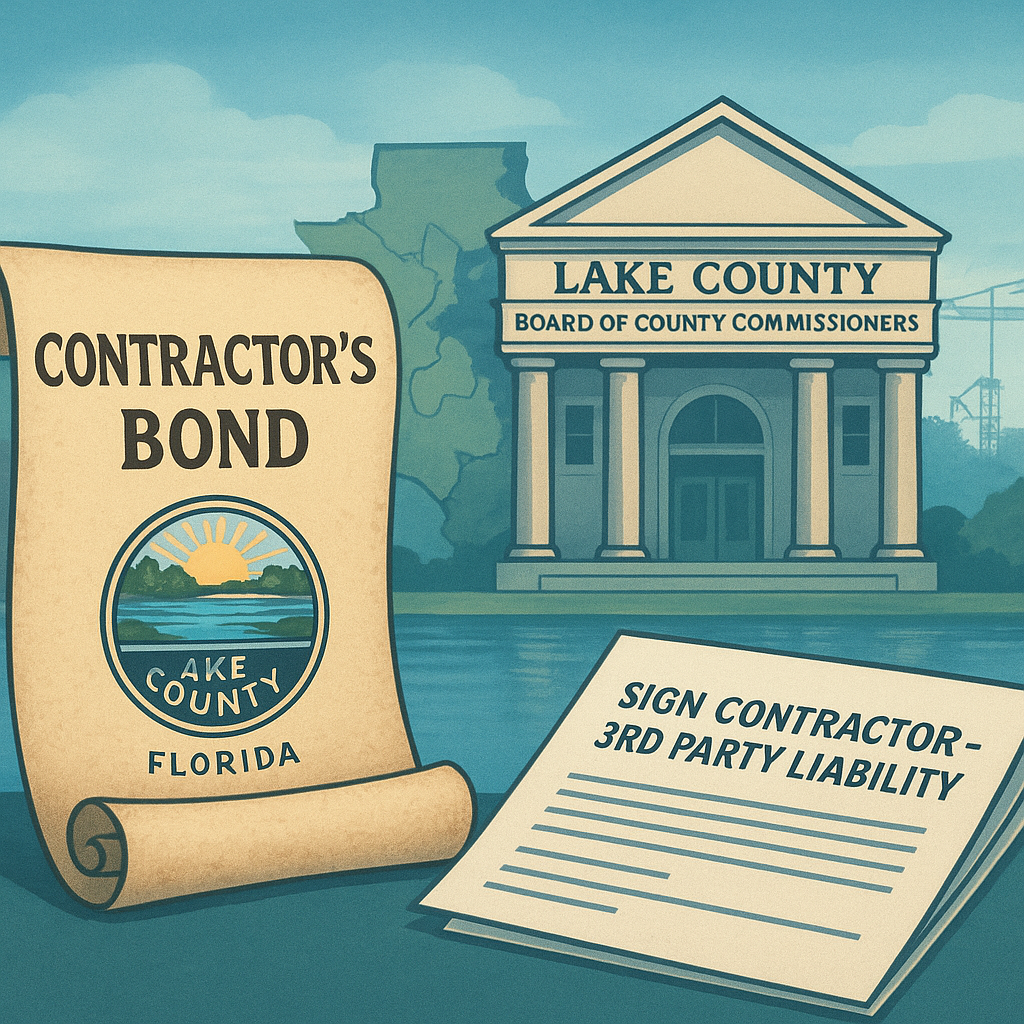
Imagine this: you hire a contractor to build your dream deck in beautiful Lake County, Florida. You pay a deposit, they start the work, and then—poof—they disappear, leaving you with a half-finished project and a much lighter wallet. It’s a nightmare scenario, but here’s the good news. Florida law offers layers of protection to keep homeowners from getting burned. You just need to know what they are and how they work. Today, we’re unraveling the mystery behind contractor bonds and the powerful safety net known as the Florida Homeowners’ Construction Recovery Fund.
If you’ve ever seen the phrase “Original On File With Lake County Contractor’s Bond” on a permit or contract, you might have wondered what it actually means for you. Is it just bureaucratic paperwork, or does it have real muscle? And what about something called “3rd Party Liability”? Let’s walk through it all in plain, everyday language, so you can feel confident and protected the next time you pick up a hammer—or hire someone who does.
What Exactly Is a Contractor Bond?
Think of a contractor bond as a financial promise. It’s a three-party agreement between the contractor, a bonding company, and you (or the agency requiring the bond). If the contractor fails to play by the rules, the bond acts like an insurance policy that can make things right. But here’s the twist: unlike traditional insurance that protects the contractor, a bond is primarily designed to protect you—the homeowner or the public.
In Lake County, many licensed contractors are required to post a bond before they can legally pull permits or perform work. That bond gets filed with the local authorities, which is why you’ll see documents noting it’s “Original On File With Lake County.” It’s not just a formality. It’s a dedicated pot of money set aside to cover certain types of mistakes, like code violations, permit problems, or incomplete work that violates the contract.
Common Types of Contractor Bonds
Not all bonds are created equal. Depending on the project, you might encounter a few different flavors:
- License and Permit Bonds: These ensure that contractors follow local building codes and laws. The Lake County Board of County Commissioners often requires these bonds to be on file before issuing permits.
- Contract Bonds: Specific to a particular project, guaranteeing the contractor will complete the job as agreed.
- Sign Contractor Bonds: Yes, even sign installers often need a bond! If a sign contractor’s work creates a safety hazard or violates local ordinances, the bond offers a path for recourse.
The key thing to remember is that a bond is your first line of defense. But it’s not the only one.
The Florida Homeowners’ Construction Recovery Fund: A Financial Lifeline
What happens if the contractor’s bond doesn’t fully cover your loss, or if something falls outside the bond’s scope? That’s where the Florida Homeowners’ Construction Recovery Fund enters the picture. This fund is like a backup parachute for homeowners who’ve been seriously harmed by a licensed contractor’s actions.
Administered by the Florida Construction Industry Licensing Board, the fund exists to reimburse homeowners for actual financial losses when a contractor commits certain violations. We’re talking about things like abandoning a project, misusing funds, or performing substandard work that violates the Florida Building Code—and then failing to fix it even after a court tells them to.
How It Works in Practice
Let’s say you hire a Lake County contractor to remodel your kitchen. The contractor has a bond on file with the county, but the damage goes beyond that amount—maybe the contractor took your money and never even ordered the cabinets. You take them to court and win a judgment, but the contractor has no assets to collect. The recovery fund can step in and pay a portion of your loss, up to certain limits set by state law.
It’s not an instant refund. You have to show you’ve exhausted other avenues first, such as filing a claim against the contractor’s bond or suing and attempting to collect. But knowing the fund exists can be a huge relief, especially when the financial hit is large.
Original On File: Why Those Words Matter in Lake County
When you see the phrase “Original On File With Lake County Contractor’s Bond” or a reference to the Board of County Commissioners, it tells you something important: the bond is logged and accessible. It’s not a photocopy of a promise that could be disputed. The original document is held by a neutral third party—the county—so you can verify it exists and is active.
Practically, this means you’re not operating on trust alone. If you need to make a claim, the county’s records provide a clear paper trail. You can contact the relevant department, confirm the bond’s status, and find out exactly which surety company issued it. This transparency turns a confusing legal concept into a real tool you can use.
Demystifying Third-Party Liability
Popping up alongside these terms is the phrase “3rd Party Liability.” Who is that mysterious third party? In most situations, the first two parties are the contractor and the bonding company or the contractor and the client. The third party is anyone else who might be affected by the contractor’s work—often a neighbor, a visitor, or a passerby.
Imagine a contractor is installing a sign for a Lake County business. If that sign is not properly secured and it falls, damaging a car parked next door, that’s a classic third-party liability claim. The neighbor didn’t have a contract with the sign contractor, but they suffered a loss because of the contractor’s work. The bond’s coverage might extend to these situations, covering damages to people or property that weren’t part of the original contract.
Why Third-Party Coverage Brings Peace of Mind
For homeowners, third-party liability is an often-overlooked layer of security. Let’s say a roofer working on your house accidentally drops a bundle of shingles onto your neighbor’s fence. While your homeowner’s insurance might get involved, the contractor’s liability bond (often filed with the county) should be the primary responder. It’s not just about fixing your own home—it’s about protecting relationships and financial boundaries within your community.
How All These Pieces Fit Together
So, let’s connect the dots. You have a Lake County contractor with a bond on file. That bond is your first recourse for many problems. If the problem is severe and the contractor’s violations fit specific criteria, and if the bond doesn’t cover the full loss, the Florida Homeowners’ Construction Recovery Fund might provide a second layer of relief. And if someone entirely outside your agreement gets hurt or their property is damaged, third-party liability coverage ensures they aren’t left high and dry.
Think of it like layers of clothing on a chilly Florida morning. You start with a shirt (the contract), add a sweater (the bond), and if the temperature really drops, you have a jacket (the recovery fund). Each layer adds warmth and protection.
Practical Steps for Lake County Homeowners
How can you make sure these protections work for you? You don’t need a law degree. Just follow a few simple habits before and during any construction project.
Verify the Bond Directly
Don’t just take the contractor’s word that a bond is “on file.” Contact the Lake County Board of County Commissioners or the local building department and ask. They can confirm if a valid bond is in place, the amount, and the surety company’s name. This small step could save you mountains of headache later.
Read Your Contract as a Safeguard
A solid contract isn’t just about the scope of work. It should mention licensing, bonding, and insurance. If a contractor can’t provide proof of these, take that as a bright red flag. A legitimate contractor will be proud to show off their credentials because it builds trust.
Know the Recovery Fund’s Limits
The Florida Homeowners’ Construction Recovery Fund isn’t a bottomless well. There are statutory caps on how much you can recover per claim and per contractor. Make yourself aware of the current limits. If your project is large, you might need to ensure the contractor carries additional insurance or a higher bond amount to fully protect your investment.
Document Everything
If a problem arises, documentation is your best friend. Keep copies of the contract, payment receipts, emails, texts, and photos of the work in progress. If you need to file a bond claim or apply to the recovery fund, a clear paper trail speeds up the process dramatically.
Ask the “What If” Questions Early
During your initial conversations with a contractor, get comfortable asking tough questions. “What happens if your work damages my neighbor’s property?” “Do you have third-party liability coverage?” “Is your bond specifically for this type of work?” A trustworthy professional will answer without hesitation and may even appreciate that you care about protecting everyone involved.
When Good Projects Go Sideways: A Quick Recovery Roadmap
Let’s paint a picture. You hired a sign contractor with a bond on file in Lake County. They installed a commercial sign for your home-based business, but the sign’s foundation is cracking and it’s leaning dangerously. Your neighbor’s car got scratched when a piece fell. What do you do?
First, contact the contractor and document the issue. If they refuse to fix it, file a complaint with the county and then file a claim against their bond. The bonding company will investigate, and if your claim is valid, they’ll pay out up to the bond amount. For the neighbor’s car, the third-party liability aspect of that same bond may cover the repair costs. If the contractor disappears and the bond is insufficient, you could then look to the recovery fund—provided the situation meets the fund’s criteria and you’ve obtained a judgment.
Does this sound like a journey? It can be, but knowing the path makes it far less daunting.
Your Peace of Mind Is the Bottom Line
Home improvement should be exciting, not frightening. Lake County’s requirement to keep contractor bonds on file, combined with the Florida Homeowners’ Construction Recovery Fund, creates a sturdy safety net. The words “Original On File” aren’t just dusty legalese; they’re a signal that oversight is in place. The mention of “3rd Party Liability” means the web of protection expands beyond just you and the contractor.
So, the next time you plan a project, big or small, take a moment to appreciate these safeguards. Ask your contractor about their bond. Confirm it’s on file with Lake County. Understand that even if something goes wrong, you’re not powerless. With a little knowledge and a few smart checks, you can walk into any construction project feeling like the expert you deserve to be.