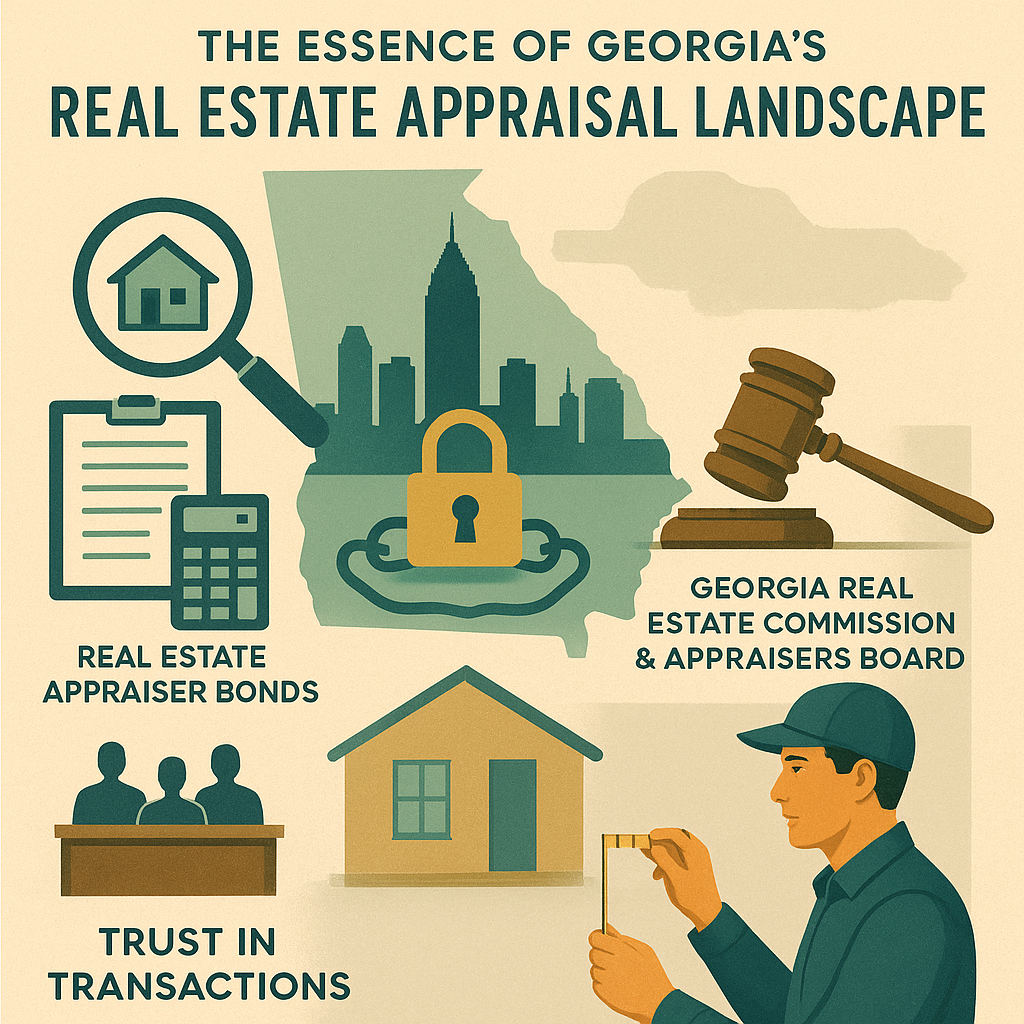
If you are stepping into the world of real estate valuation in the Peach State, you have probably come across the terms “appraisal management company bond” and “real estate appraiser bond.” At first glance, these might sound like complicated insurance policies or hidden fees. But think of them as a promise—a financial promise that protects everyone involved in a real estate transaction. Whether you are an appraisal management company (AMC) vetting appraisers or a licensed appraiser measuring square footage, understanding Georgia’s bonding requirements is not just a box to check. It is a key part of building trust with lenders, homeowners, and the state.
In this post, we will break down everything you need to know about Georgia’s real estate appraisal bonds. We will skip the legal jargon and explain what these bonds are, who needs them, what they cost, and how you can get one without a headache. So grab a cup of coffee, and let’s dive into the friendly side of surety bonds.
What Is a Surety Bond, Anyway?
Before we zoom in on Georgia’s specific rules, let’s clarify what a surety bond actually is. Many people mistake it for insurance, but it works a little differently. Imagine a three-legged stool. One leg is the principal (that is you, the business or appraiser buying the bond). The second leg is the obligee (the Georgia Real Estate Commission & Appraisers Board, which requires the bond). The third leg is the surety company, the financial backer that issues the bond.
If the principal follows all state laws and professional standards, everything is fine. But if a rule is broken and a client, lender, or the public suffers financial harm, a claim can be filed against the bond. The surety will pay out up to the bond’s limit—but here is the catch: the principal must pay that money back. In simple terms, a surety bond is a line of credit that guarantees you will play by the rules. It is your wallet saying, “I stand behind my work.”
The Georgia Real Estate Commission & Appraisers Board: The Watchful Eye
In Georgia, the real estate industry is overseen by the Georgia Real Estate Commission & Appraisers Board (GREC). This agency regulates real estate agents, brokers, appraisers, and appraisal management companies. Their mission is to protect the public by making sure professionals are qualified, ethical, and financially responsible. One way they do that is by requiring certain parties to post a surety bond before they can get or renew a license.
Why does the state insist on these bonds? Because real estate transactions involve huge sums of money and life-changing decisions. A faulty appraisal, fraudulent behavior, or an AMC that fails to pay its appraisers can cause serious damage. The bond acts as a safety net, giving those who are harmed a clear path to recover losses without relying solely on lengthy court battles.
Georgia Appraisal Management Company (AMC) Bonds
If you run or plan to start an appraisal management company in Georgia, the AMC bond is non-negotiable. An AMC acts as a middleman between lenders and appraisers, handling the ordering, tracking, and quality control of appraisals. Because AMCs wield so much influence over the process, the state wants to make sure they operate fairly and honestly.
Who Needs It?
Any firm that registers as an appraisal management company with the Georgia Real Estate Appraisers Board must file a surety bond. This applies whether you are a brand-new AMC in Atlanta or a well-established company expanding into Savannah. The bond is a prerequisite for obtaining and maintaining your registration.
How Much Coverage Is Required?
Georgia law typically sets the AMC bond amount at $25,000. While that might sound like a lot, remember this is not the price you pay; it is the maximum amount the surety will cover in the event of a valid claim. The actual out-of-pocket cost for you is just a small percentage, which we will cover shortly.
Who Does the AMC Bond Protect?
The bond protects multiple parties. It can compensate appraisers if the AMC fails to pay them for completed work. It can also shield lenders or consumers if the AMC engages in deceptive practices, uses unlicensed appraisers, or violates the rules set by the Georgia board. Think of it as a financial referee that keeps everyone honest.
Georgia Real Estate Appraiser Bonds
Now, you might be wondering, what about individual appraisers? Do they also need a bond? The answer depends on your specific license level and registration type. While not every appraiser in Georgia is required to hold a surety bond, certain credentials do come with this obligation. Even when it is not mandated, some appraisers choose to obtain a bond voluntarily to stand out in a competitive market.
When Is an Appraiser Bond Required?
The Georgia Real Estate Appraisers Board may require a real estate appraiser bond for certain classifications or for appraisers who have faced disciplinary action in the past. In many cases, an appraiser bond is set at $25,000 as well, mirroring the AMC requirement. It serves as a guarantee that the appraiser will perform valuations ethically, comply with the Uniform Standards of Professional Appraisal Practice (USPAP), and follow Georgia’s laws.
How Does This Help You as an Appraiser?
Imagine you are an experienced appraiser looking to build your client base. Having a surety bond in place tells lenders and AMCs, “I take my professional responsibilities seriously, and I have a financial backup to prove it.” It adds a layer of credibility that can open doors and set you apart from competitors who only carry the bare minimum of insurance. Plus, if a client ever files an unjust claim against you, a properly structured bond can help manage the situation without draining your business savings.
Why Georgia Requires These Bonds: A Quick Look at the Bigger Picture
You might be asking yourself, “Isn’t errors and omissions insurance enough?” That is a great question. E&O insurance protects you from mistakes. A surety bond, on the other hand, protects the public and your business partners. The state uses bonds as a regulatory tool to enforce standards. If you break the rules, you face a bond claim that you must repay. That immediate financial sting encourages compliance far more effectively than a vague warning letter.
For the Georgia Real Estate Commission & Appraisers Board, these bonds mean fewer headaches. They can focus on licensing and education, knowing that a solid financial mechanism exists to handle misconduct. For consumers, it means peace of mind. And for professionals, it is a clear signal: operate ethically, and the bond is just a simple annual expense.
How Much Do These Bonds Cost?
Here is the part that surprises most people: you do not pay the full bond amount. Instead, you pay a premium, which is a small percentage of the total coverage. For a $25,000 Georgia AMC bond or appraiser bond, your annual premium could be as low as $250 to $750, depending on your personal credit score, business financials, and industry experience.
Several factors influence your premium:
- Your personal credit history (a strong score often unlocks the lowest rates).
- Your business or professional track record.
- Any previous bond claims or license suspensions.
- The specific surety company you choose (prices can vary).
Even if your credit is less than perfect, you can still get bonded. Many surety companies offer programs for applicants with credit challenges, though the premium might be slightly higher. The key is to shop around and work with a bond provider who understands Georgia’s requirements inside and out.
Step-by-Step: How to Get Your Georgia Appraisal Bond
Navigating the bonding process does not have to feel like a chore. Follow these simple steps, and you will have your bond ready in no time.
- Confirm your exact requirement. Check the Georgia Real Estate Commission & Appraisers Board website or your license application documents to determine whether you need an AMC bond, an appraiser bond, or both. Note the required bond amount.
- Gather your information. You will need your business name, contact details, social security number (for a credit check), and sometimes proof of your professional license or registration.
- Request a quote from a reputable surety bond agency. Look for an agency that specializes in real estate bonds and knows Georgia’s regulations. Many allow you to apply online in just a few minutes.
- Review the premium offer. Once the surety evaluates your application, you will receive a quote. If you are happy with the price, pay the premium to activate the bond.
- File the bond with the state. The surety will provide you with the official bond form. Sign it and submit it to the Georgia Real Estate Commission & Appraisers Board as part of your licensing or renewal paperwork. Keep a copy for your records.
Renewal is typically annual. Mark your calendar so your bond never lapses. A gap in coverage can jeopardize your license and halt your ability to work.
Separating Fact from Fiction: Common Surety Bond Misconceptions
Let’s clear up a few myths that often cause confusion.
Myth: “A surety bond is the same as E&O insurance.”
Truth: E&O insurance covers your own legal defense and damages when you make a mistake. A surety bond protects the public and must be repaid if a claim is paid out. You need both, but they serve completely different purposes.
Myth: “If I have a bond, I’m protected from all lawsuits.”
Truth: The bond only covers specific wrongful acts outlined by law, such as fraud or failure to follow state regulations. It is not a blanket shield. You still need insurance for general liability, errors, and omissions.
Myth: “Getting bonded is expensive and takes forever.”
Truth: For a standard $25,000 bond, premiums can be surprisingly affordable, and the online application process often yields same-day approval. It is one of the quickest licensing steps you will complete.
Real-Life Scenario: When a Bond Saves the Day
Let’s paint a picture. Suppose an AMC in Columbus, Georgia, hires several appraisers, collects fees from a lender, but then fails to pay the appraisers for their completed work. The unpaid appraisers can file a claim against the AMC’s $25,000 surety bond. The surety investigates, and if the claim is valid, it pays the appraisers up to the bond’s full amount. The AMC then must reimburse the surety. Without that bond, the appraisers might spend months in court trying to collect.
On the flip side, imagine an appraiser who knowingly inflates a home’s value, causing a lender to approve a loan that later goes bad. The lender can seek compensation from the appraiser’s bond. This swift financial remedy protects the housing market’s stability and maintains public confidence in the appraisal profession.